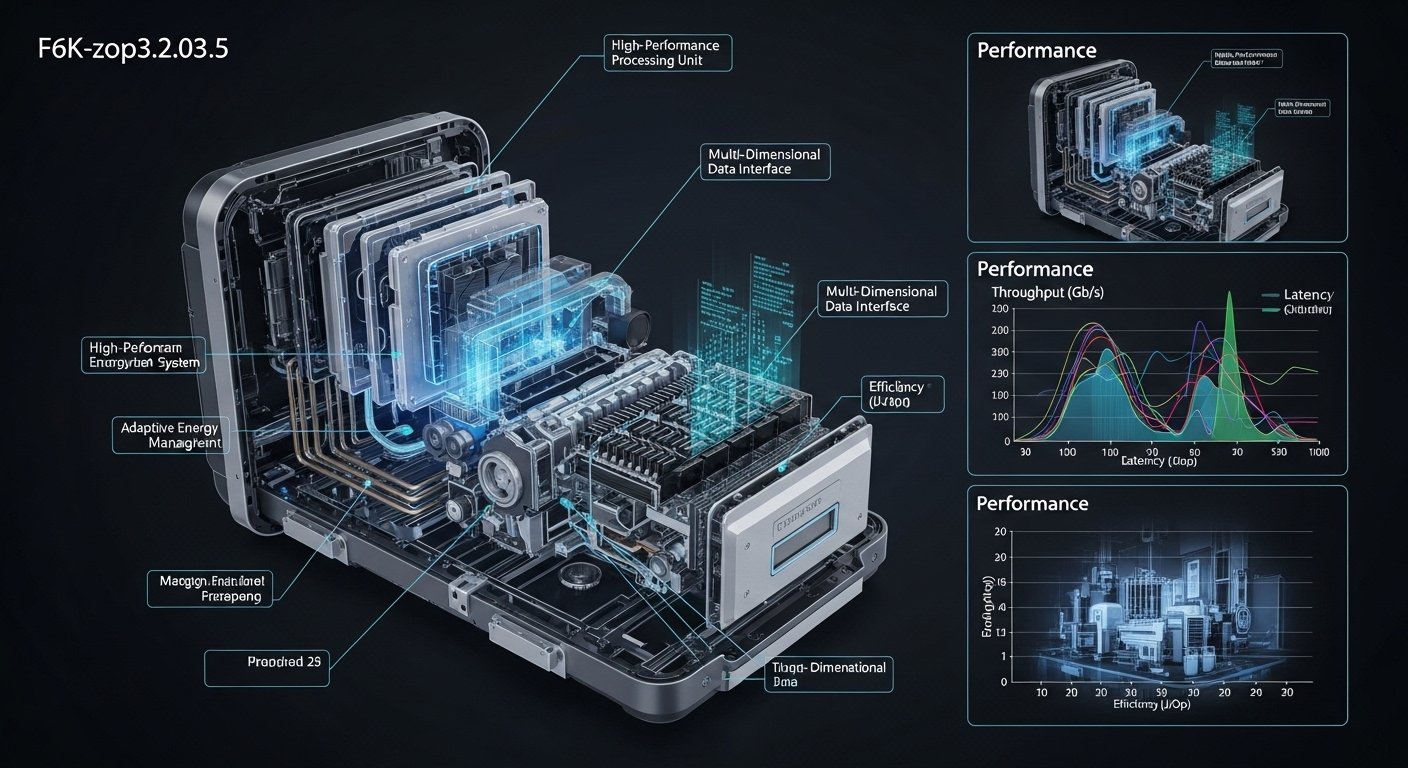
In today’s fast-moving tech landscape, the f6k-zop3.2.03.5 model is gaining attention for its structured architecture, flexible integration options, and reliable performance across multiple environments. Whether applied in automation systems, data processing frameworks, or embedded technology stacks, this model has emerged as a versatile solution for modern technical demands. Understanding its design, features, and operational strengths can help professionals make informed implementation decisions.
Understanding the Core Architecture
At its foundation, the f6k-zop3.2.03.5 model is built around a modular structure that prioritizes adaptability. Instead of relying on a rigid framework, it allows system engineers to configure components according to workload requirements. This modularity reduces compatibility issues and improves scalability.
The internal processing layer of the f6k-zop3.2.03.5 model is optimized for efficient task distribution. By balancing computational loads dynamically, it ensures minimal latency even when handling complex instructions. This makes it suitable for environments where performance stability is essential.
Another defining element is its layered communication protocol. The model separates command processing from output rendering, reducing the risk of data bottlenecks. As a result, the f6k-zop3.2.03.5 model performs consistently under both standard and high-demand conditions.
Key Features That Set It Apart
1. Advanced Processing Stability
One of the standout characteristics of the f6k-zop3.2.03.5 model is its stable processing engine. It manages sequential and parallel operations without compromising output accuracy. This reliability makes it valuable in systems where downtime can be costly.
2. Flexible Integration Options
Compatibility is often a major concern when introducing new technology into existing infrastructures. The f6k-zop3.2.03.5 model addresses this by supporting multiple interface standards. Whether integrated into cloud-based ecosystems or local server networks, it adapts with minimal configuration changes.
3. Optimized Resource Management
Efficient resource allocation distinguishes this model from less refined alternatives. The f6k-zop3.2.03.5 model intelligently monitors CPU and memory usage, redistributing tasks when necessary. This helps prevent overload and enhances long-term system durability.
4. Security-Oriented Framework
Modern systems demand robust security measures. The architecture of the f6k-zop3.2.03.5 model incorporates encryption layers and authentication protocols that reduce vulnerability risks. Its internal safeguards support compliance with standard data protection practices.
Performance in Real-World Applications
Practical performance determines whether a model moves beyond theoretical value. In controlled environments, the f6k-zop3.2.03.5 model demonstrates efficient response times and consistent throughput rates. These traits are especially important in data-driven industries where processing delays can affect outcomes.
In automation contexts, the model handles synchronized instructions smoothly. By maintaining signal accuracy, it reduces operational errors. Many technical teams report that implementing the f6k-zop3.2.03.5 model results in smoother workflow coordination and improved task precision.
Additionally, in environments requiring high-frequency updates, it maintains responsiveness without excessive power consumption. This energy efficiency supports sustainable system design.
Configuration and Deployment Considerations
Deploying the f6k-zop3.2.03.5 model requires a clear understanding of operational goals. Before installation, it is important to evaluate compatibility with current hardware and software layers. Fortunately, its adaptable design simplifies the onboarding process.
The configuration interface is structured for clarity. Administrators can customize operational thresholds, define priority tasks, and monitor system performance metrics in real time. Because of this transparency, maintaining the f6k-zop3.2.03.5 model becomes manageable even in large-scale infrastructures.
Routine updates further enhance performance stability. Regular maintenance ensures that optimization parameters remain aligned with system demands. When properly configured, the model delivers consistent results over extended periods.
Advantages Over Comparable Models
Compared to other structured systems in its category, the f6k-zop3.2.03.5 model balances efficiency and flexibility more effectively. Some models prioritize raw processing speed but sacrifice stability under sustained loads. Others focus heavily on security but lack scalable integration.
This model strikes a practical middle ground. Its architecture supports balanced throughput, system resilience, and resource efficiency. Organizations seeking a dependable yet adaptable solution often find that the f6k-zop3.2.03.5 model aligns with both short-term operational needs and long-term growth strategies.
Another advantage lies in its predictable performance metrics. Instead of fluctuating output quality under varying demands, it maintains stable operational benchmarks.
Maintenance and Long-Term Reliability
Technology investments must prove their durability. The f6k-zop3.2.03.5 model is engineered with long-term sustainability in mind. Its internal diagnostic tools detect potential irregularities before they escalate into system failures.
Scheduled monitoring improves performance forecasting. By analyzing usage patterns, administrators can anticipate scaling requirements and prevent interruptions. The structured update cycle further enhances reliability, ensuring that the model remains compatible with evolving system standards.
Over time, consistent maintenance contributes to stronger operational resilience. Systems built around the f6k-zop3.2.03.5 model often demonstrate lower maintenance costs compared to less optimized alternatives.
Future Outlook and Innovation Potential
As technological ecosystems continue to evolve, adaptable frameworks gain greater importance. The modular and scalable nature of the f6k-zop3.2.03.5 model positions it well for integration with next-generation platforms. Its flexible configuration options allow developers to refine performance parameters without rebuilding entire infrastructures.
Future upgrades are likely to enhance automation compatibility, processing precision, and security enhancements. Because the architecture already supports extensibility, expansion can occur without major structural overhauls.
Organizations planning for growth can leverage the f6k-zop3.2.03.5 model as a stable foundation while preparing for innovation-driven expansion.
Conclusion
The f6k-zop3.2.03.5 model stands out as a balanced, adaptable, and performance-focused solution in modern technical systems. With its modular architecture, resource efficiency, security integration, and real-world reliability, it meets the demands of both small-scale operations and enterprise-level environments. Proper configuration and consistent maintenance maximize its capabilities, ensuring long-term stability and scalability. For professionals seeking a dependable yet flexible framework, this model presents a compelling option that aligns with evolving technological standards.